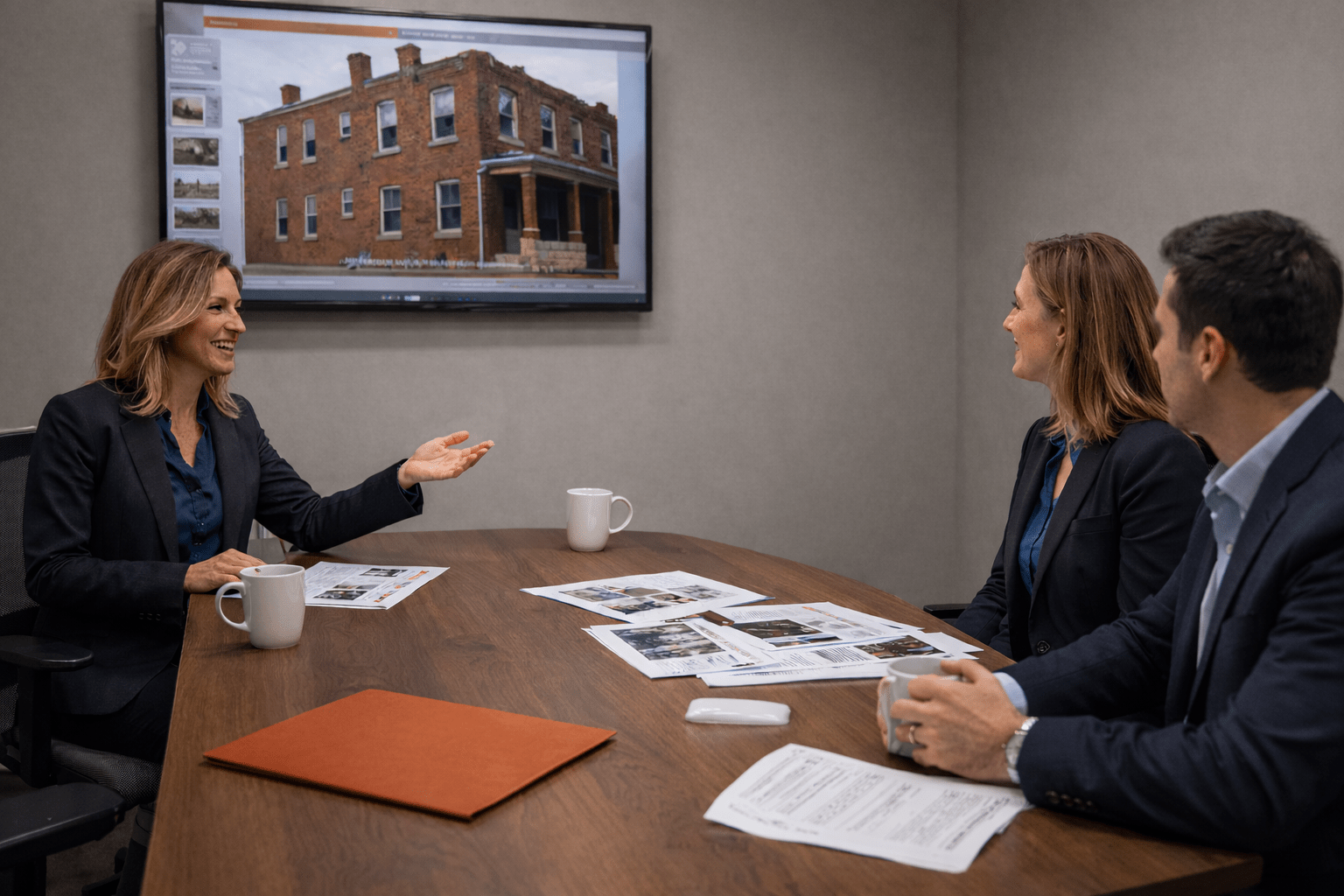
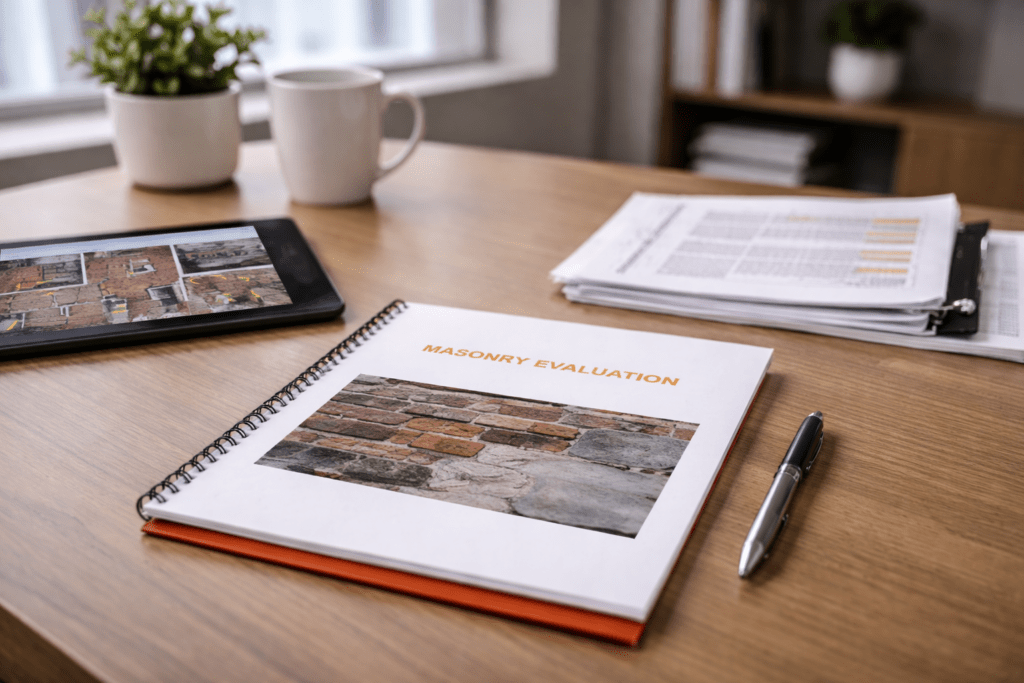
An evaluation is the right starting point when decisions need to be made and time is of the essence — regardless of whether the next step is an estimate, construction work, or long-term planning.
Many agents, investors, and property owners try to use free estimates to fill this role, but estimates are built around how a contractor plans to perform the work. Scope and pricing can vary based on experience, crew structure, timing, and business realities — not just the condition of the masonry itself. Not only can this slow the process down as multiple contractors are contacted and scheduled, it also filters the masonry through each contractor’s individual circumstances. An evaluation, instead, filters the masonry through your goals and the needs of the property.
An evaluation focuses first on understanding the masonry clearly and objectively, so decisions can move forward with confidence and speed.

A masonry evaluation is different from a traditional estimate.
Instead of starting with pricing or production decisions, the focus is on understanding the condition of the masonry and providing clear, practical findings you can use to move forward.
Evaluations often happen alongside general inspection reports. When inspection notes raise questions about brick, stone, or structural conditions, the evaluation helps translate those concerns into real-world masonry insight — without tying the outcome to a specific repair scope or bid.
It doesn’t replace inspections, and it doesn’t replace estimates. It simply brings clarity first, so the next step — whatever that ends up being — is based on a clear understanding of the masonry itself.

1. Schedule the Evaluation
Choose a time that works for you. Once scheduled, information will be gathered to ensure we understand your unique situation — details about the property, masonry portions of an inspection, and your plans moving forward. Each evaluation is tailored to you and the property itself.
2. On-Site Evaluation
The masonry is reviewed in person with attention to structure, exposure, age, and long-term performance. The focus is on understanding what’s actually present — not jumping straight into a repair scope.
3. Written Findings
You receive clear written observations and practical recommendations based on current conditions. The goal is straightforward communication you can use to make decisions with confidence.
4. Next Steps
Some evaluations lead to an estimate and work being scheduled. Others are used for negotiations, budgeting, or long-term planning. The next step after the evaluation depends on what makes the most sense for the property and your goals.
When an evaluation happens during an inspection period, the outcome of the transaction often determines what comes next. Part of the value of the evaluation process is providing the clarity to move forward on the right deals with confidence — and to walk away from ones that don’t align with your real estate strategy.

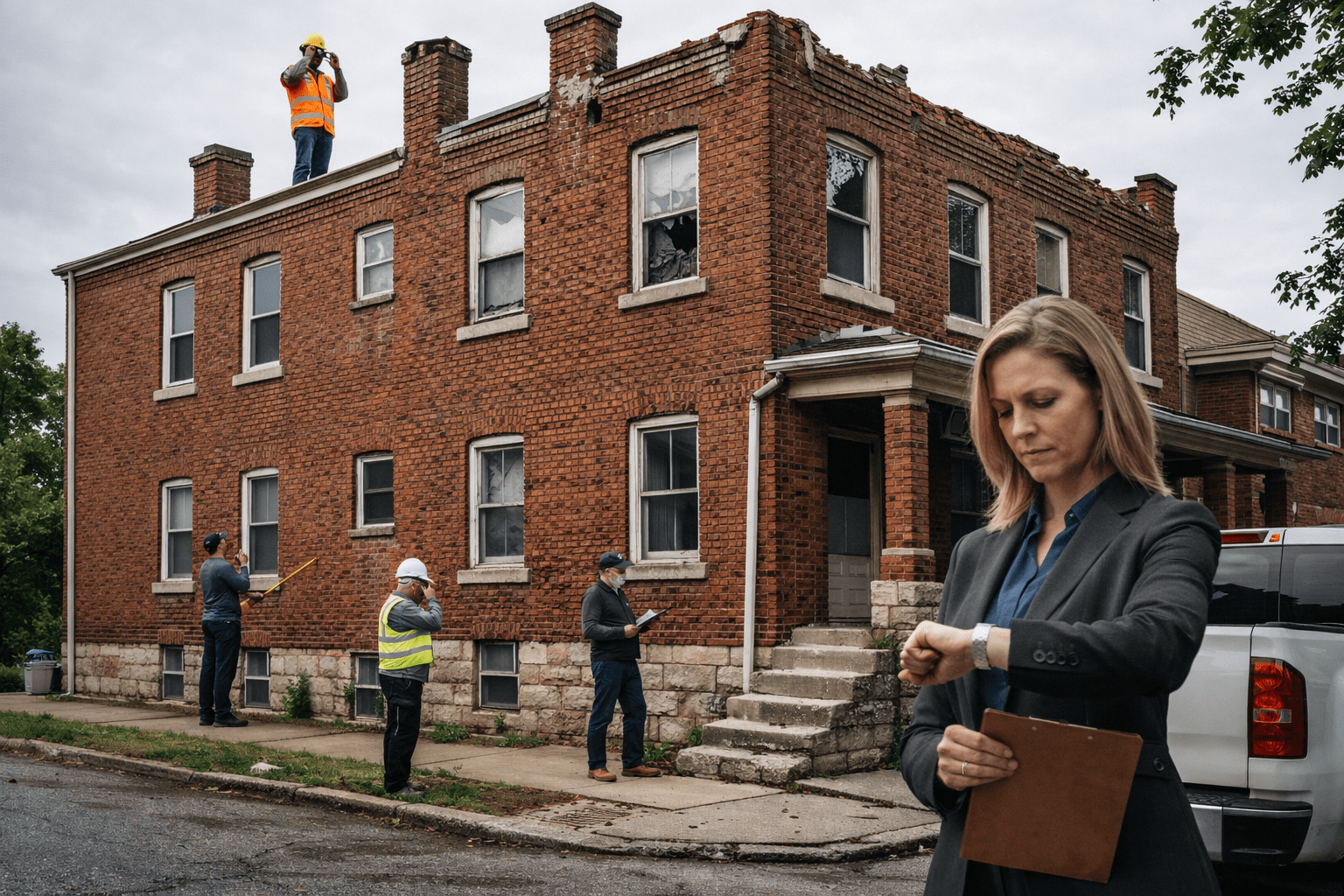
Real estate transactions move fast. Property managers budget well in advance. Masonry can be expensive and highly nuanced.
Evaluations are structured to fit naturally into active decision timelines. The goal is to provide clear masonry insight without slowing down negotiations, budgeting conversations, or project momentum.


Because evaluations focus on understanding conditions and providing independent written findings, they are offered as a professional service rather than a free estimate.
If an evaluation leads to construction or repair work later, the findings help ensure that future scope and pricing are based on a clear understanding of the masonry — not assumptions.
Most standard residential evaluations begin at $500, depending on property size, complexity, and travel.
If an evaluation sounds like the right starting point, choose a time below to get started.